Welcome to Shenzhen Dongshengyuan Electrical Equipment Co., Ltd.

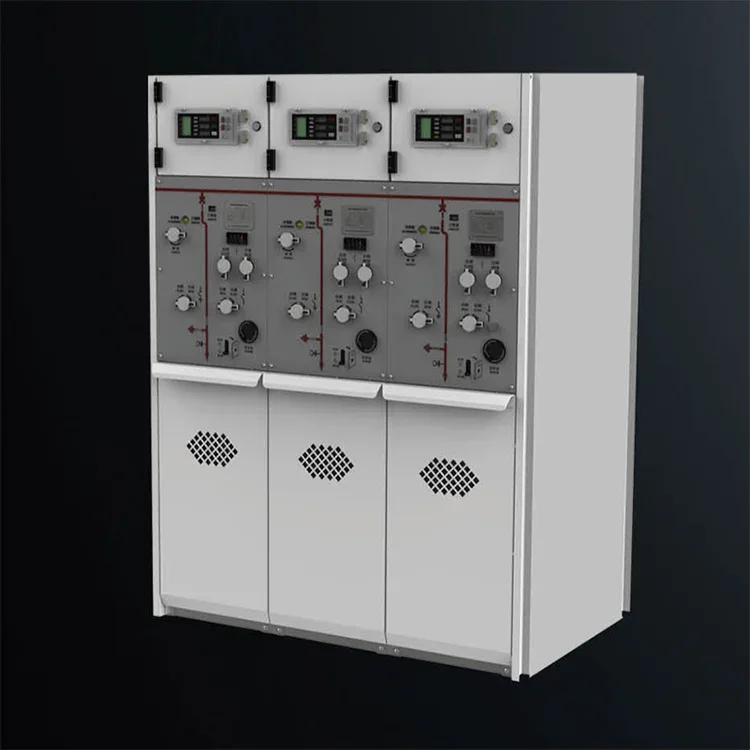
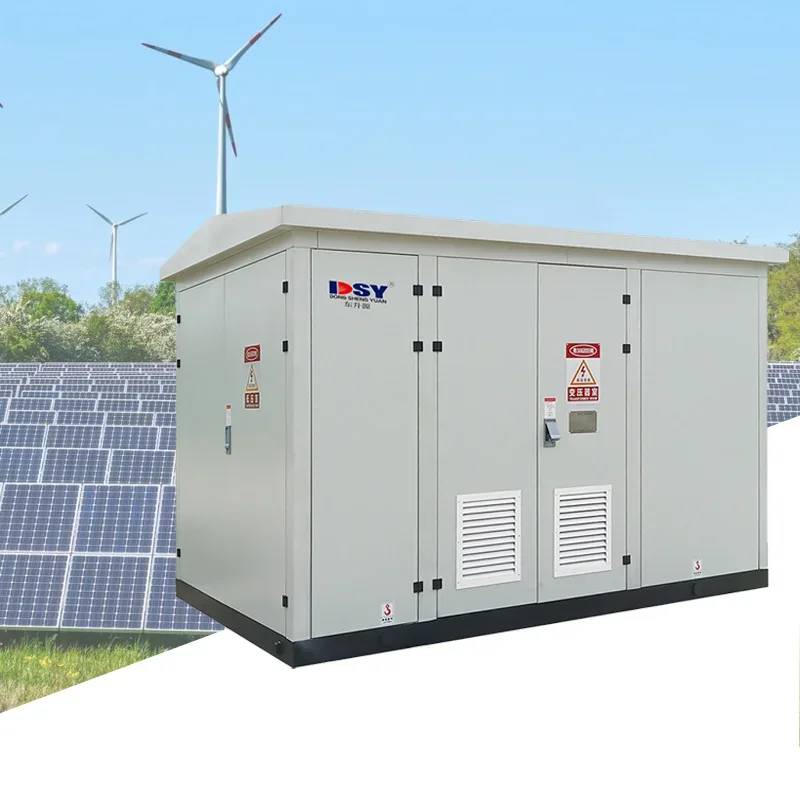
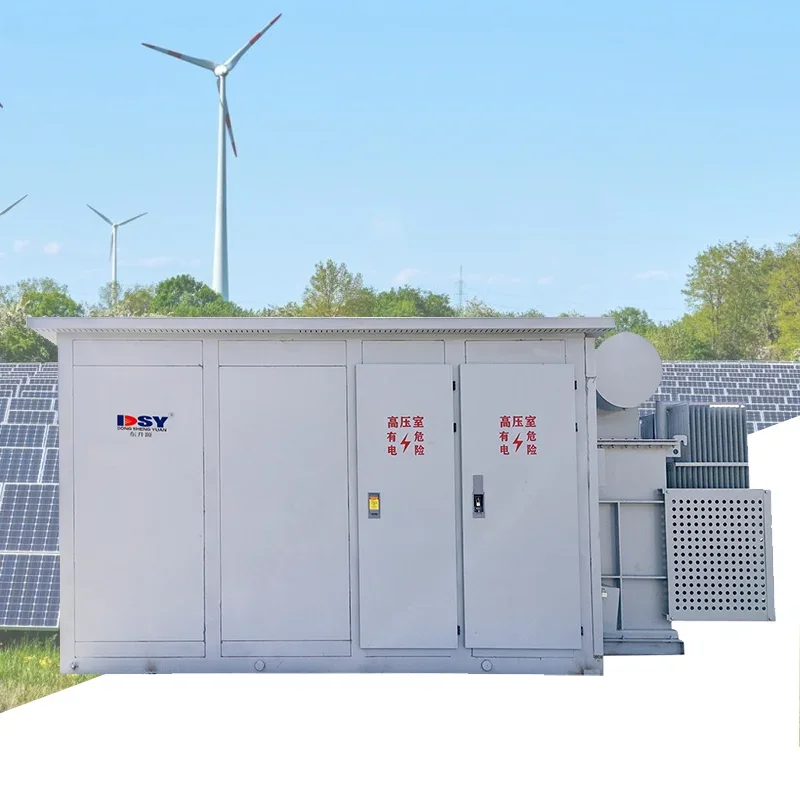
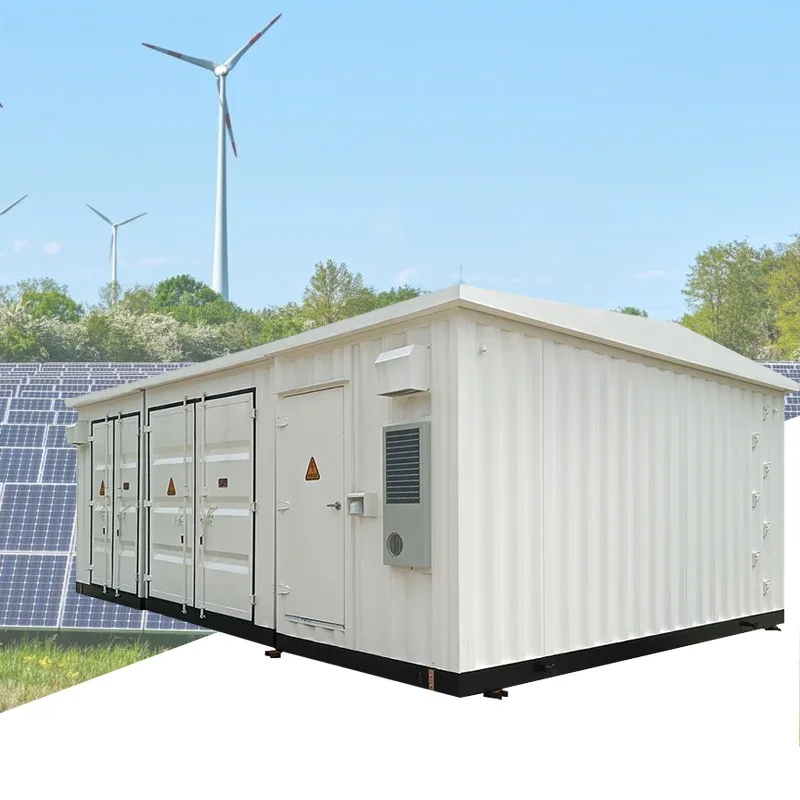
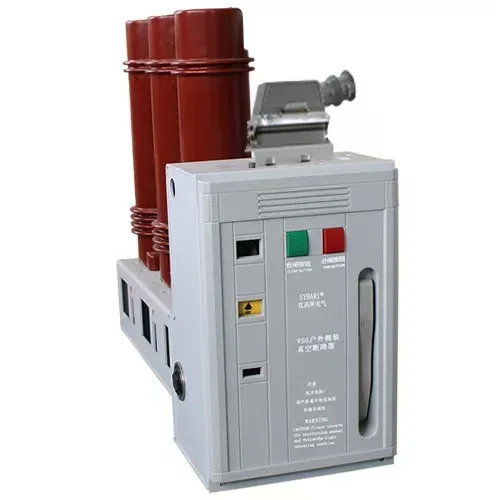
How many mechanical operations should a ring main unit withstand? M1, M2 and the duty cycle that decides it
Mechanical endurance classes (M1/M2) define no-load operation counts, not electrical interrupting life — match the class to your actual duty cycle rather than defaulting to the highest number.
Nov 16,2026
How many mechanical operations should a ring main unit withstand?
Short answer: for a load-break switch under IEC 62271-103, class M1 is 1,000 mechanical operations and class M2 is 5,000. A circuit breaker under IEC 62271-100 uses 2,000 for M1 and 10,000 for M2. The number that matters is not the class - it is your own duty cycle, because a unit specified for 5,000 operations can still be worn out in six years if it is operated daily.
Quick facts
Item | Value | Source |
Load-break switch, class M1 | 1,000 mechanical operations | IEC 62271-103 |
Load-break switch, class M2 | 5,000 mechanical operations | IEC 62271-103 |
Circuit breaker, class M1 | 2,000 mechanical operations | IEC 62271-100 |
Circuit breaker, class M2 | 10,000 mechanical operations | IEC 62271-100 |
Earthing switch, class E1 / E2 | 5 make operations at rated short-circuit current | IEC 62271-102 |
Typical distribution operation rate | 0.1 to 0.5 operations per day | Utility practice |
20-year total at 0.2 ops/day | 1,460 operations | Calculated |
20-year total at 1 op/day | 7,300 operations | Calculated |
What the mechanical test runs at | No load, no current | IEC 62271-103 / -100 |
End of test checks | Temperature rise, dielectric, resistance | IEC 62271-200 |
What do M1 and M2 actually mean?
M1 and M2 are endurance classes, not quality grades. They answer one question: how many times can the mechanism close and open without maintenance, and still meet its specified characteristics afterwards?
The test is a mechanical cycling test. The switch is operated at no load, at rated auxiliary supply voltage, at the specified operating rate, for the required number of cycles. Afterwards it must still pass a temperature rise check, a dielectric test and a contact resistance measurement. If it fails any of those, the class is not awarded.
Two things follow from that definition, and both are routinely misunderstood. First, the class is verified on a test sample, in a test arrangement, at a test ambient. Second, the number refers to operations without maintenance - which is not the same as operations without inspection.
Why 5,000 operations is not 5,000 fault interruptions
This is the single most common confusion in specifications. Mechanical endurance is measured with no current flowing. Electrical endurance - the ability to interrupt current - is a separate class with a separate test, and the numbers are one to two orders of magnitude smaller.
A load-break switch rated M2 for 5,000 mechanical operations may be tested for only a few hundred operations at rated current, and a much smaller number at rated short-circuit current. If someone in a tender document writes 'mechanical endurance 10,000 operations' intending it to cover fault interruption duty, they have specified nothing that can be verified, and the supplier can meet the letter of the requirement while the actual electrical duty remains untested.
The correct specification separates the two: mechanical class for the mechanism, electrical class for the interrupting duty, and a stated number of fault operations expected over the life of the unit.
How do you convert your duty cycle into a class requirement?
Do the arithmetic before the tender, not after.
A unit operated twice a week is 104 operations per year, so 2,080 over 20 years. That sits between M1 and M2 for a load-break switch, which means M2 is the sensible choice with margin, and M1 would be marginal.
A unit operated once a day is 365 per year, so 7,300 over 20 years. That exceeds M2 for a load-break switch and sits between M1 and M2 for a circuit breaker. If the daily operation is a planned switching duty - a ring main unit used to reconfigure the network every morning - the mechanism, not the insulation, becomes the limiting component.
A unit operated twice a day as part of an automation scheme is 14,600 over 20 years. No standard class covers that. The answer is not a higher class, because there is not one; the answer is either a different switching device, or a maintenance interval based on operation count rather than calendar time.
Which operations wear a mechanism fastest?
Not all operations are equal, even at no load.
- Spring charging cycles. Every close operation charges the spring, and the charging motor, the cam and the latch see the load. A mechanism operated 5,000 times has run its charging train 5,000 times.
- Manual operation. The manual handle applies force through a different path than the motor, often through a linkage that is not designed for repeated use. Manually operating a motorised unit as routine practice is a good way to wear out the manual linkage first.
- Repeated reclose attempts. An auto-reclose scheme can add several operations per fault, and those operations happen at the worst possible moment - immediately after a fault, with the mechanism still hot and the contacts still settling.
- Environment. Dust and humidity turn lubrication into an abrasive paste. A mechanism in a coastal or dusty site can consume its grease life long before it consumes its operation count, which is why calendar-based inspection still matters.
Does the endurance class depend on the mechanism type?
The class is a property of the complete switching device, not of the mechanism alone, but the mechanism type decides which part wears out first.
Mechanism | What wears first | Practical note |
Spring (stored energy) | Cam, latch, charging motor brushes | Most common in MV; the charging train sees every close |
Magnetic actuator | Capacitor bank, control electronics | Fewer mechanical parts; capacitor life becomes the limit |
Manual | Linkage pins, handle bearings | Rated for occasional use, not for daily operation |
Motor-driven with manual backup | Manual linkage, clutch | Backup path wears out first if used as routine |
This matters when comparing quotations. Two units both claiming M2 may have very different wear profiles, and the one with the lower first-cost may need a mechanism overhaul earlier. Ask which component sets the maintenance interval, and whether it is replaceable in the field or the unit has to come out.
How is endurance verified without destroying the unit?
It is not verified on your unit. Endurance is a type test on a sample, and the results are published in the type test report. What you can verify on each unit is different, and it is worth being clear about the boundary.
Routine tests check assembly and adjustment: insulation, resistance, mechanical operation at minimum and maximum auxiliary voltage, interlock function, and the mechanical characteristic curve. They do not tell you how many operations remain. No non-destructive test does.
What you can do instead is measure the parameters that indicate wear, and track them: opening and closing times, contact travel, bounce time, and charging motor current. A mechanism at 40% of its endurance life with a stable characteristic curve is in better condition than one at 10% with a drifting curve. The class number tells you the design intent; the trend tells you the actual condition.
What the test does not cover
Three gaps worth knowing about.
First, the test is at no load. Contact erosion, arcing by-products and contact welding are all absent from the mechanical test, so the mechanism that passes 5,000 cycles in the lab has never seen the thermal and chemical environment of real interruption.
Second, the test is on one sample. If your order is 200 units, the class tells you about the design, not about unit 187. Routine tests verify each unit's assembly, not its endurance.
Third, the test arrangement is fixed. Operating a unit with a long external linkage, an unusual cable arrangement, or an interlock that was modified on site adds loads the test never applied.
What about the earthing switch?
The earthing switch is usually forgotten until someone reads the nameplate. Under IEC 62271-102, class E1 means the switch has been tested for 5 make operations at rated short-circuit current, and E2 means 5 make operations plus the associated mechanical endurance. The number is small on purpose: making a fault circuit is a violent duty, and five operations is enough to prove the design.
Two practical consequences. First, an earthing switch is not a switching device - it closes onto a circuit that should already be dead, and the short-circuit make rating exists for the case where somebody was wrong. Second, class E2 says nothing about how many times the switch will close onto a dead circuit; for that you need the mechanical class, which is usually in the thousands.
So when the specification says earthing switch class E2, it is describing a fault-duty capability, not a maintenance interval. Watch for tenders that treat E2 as a lifetime number. It is not, and the failure mode when it is treated that way - a switch that has been closed onto a live circuit a few times too often - is not graceful.
What should go into the specification?
Five lines, and they take ten minutes to write:
- Mechanical endurance class per IEC 62271-103 or -100, with the edition cited. Class numbers have been stable for years, but cite the edition you are contracting against.
- Expected operations over the design life, stated as a number, derived from the operating philosophy - not left as 'occasional operation'.
- Electrical endurance class stated separately, with the number of rated-current and rated short-circuit operations required.
- End-of-test verification list: temperature rise, dielectric, contact resistance, and the acceptable drift from the initial values.
- Maintenance trigger: operation count, calendar interval, or condition-based, and which one takes precedence.
Frequently asked questions
Is M2 always better than M1?
Not automatically. M2 costs more, and if the duty cycle is 2,000 operations over 20 years, the extra endurance buys nothing. It is better to spend the difference on a mechanism that is easier to inspect.
Does a higher mechanical class extend the electrical life?
No. They are separate tests. A mechanism that cycles 10,000 times without current may still have modest interrupting endurance, and vice versa.
Can mechanical endurance be extended by maintenance?
In practice, yes - relubrication and replacement of worn pins can extend mechanism life well beyond the class number. But that is a maintenance regime, not a rated value, and it needs to be written into the O&M plan with an inspection interval.
Why does the standard measure operations without current?
Because it isolates the mechanism. Mixing electrical and mechanical duty in one test makes the result impossible to attribute - you would not know whether a failure came from wear or from arcing.
What is a realistic inspection interval for a ring main unit?
For a unit operating a few times a month, a visual and functional inspection every 2 to 3 years, with a mechanical characteristic measurement every 3 years, is a common practice. For a unit operating daily, the operation count should drive the interval, not the calendar.
Does the operating speed affect endurance?
Yes. Faster operation means higher impact energy at the end stops, which is why buffer condition matters as much as the operation count. A mechanism with a degraded buffer can wear out well inside its rated class.
Related News

From June 5th to 8th, 2025, Shenzhen Dongshengyuan Electrical Equipment Co., Ltd. (hereinafter referred to as "Dongshengyuan Electric") participated in the Southeast Asia Electricity and Energy Exhibition (SEAPAE) held in Jakarta, Indonesia. During the exhibition, the company highlighted its three core product lines: high-voltage and low-voltage distribution switchgear, intelligent circuit breakers, and environmentally friendly load switches. These products are designed to provide targeted solutions for the high temperature and high humidity environments commonly found in Southeast Asia, as well as the growing demand for new energy access. They have successfully attracted over 200 industry customers for business negotiations.
The difference between circuit breakers and vacuum circuit breakers
Circuit breaker is an abbreviation for pole type circuit breaker. Circuit breakers are also vacuum circuit breakers
1B601, Lefu Square, No. 481 Guangming Avenue, Dongkeng Community, Fenghuang Street, Guangming District, Shenzhen
Request Quote
Note: Please leave your contact information and our professionals will contact you as soon as possible!