Welcome to Shenzhen Dongshengyuan Electrical Equipment Co., Ltd.

End-of-Life Handling of Eco-Gas Switchgear: Recovery, Reuse and Destruction
SF6 and eco-gas ring main unit end-of-life guidance: mandatory gas recovery, EU F-gas 2024/573 phase-out schedule, CO₂e calculation, IEC standards, refurbishment and scrapping rules for MV switchgear.
Nov 13,2026
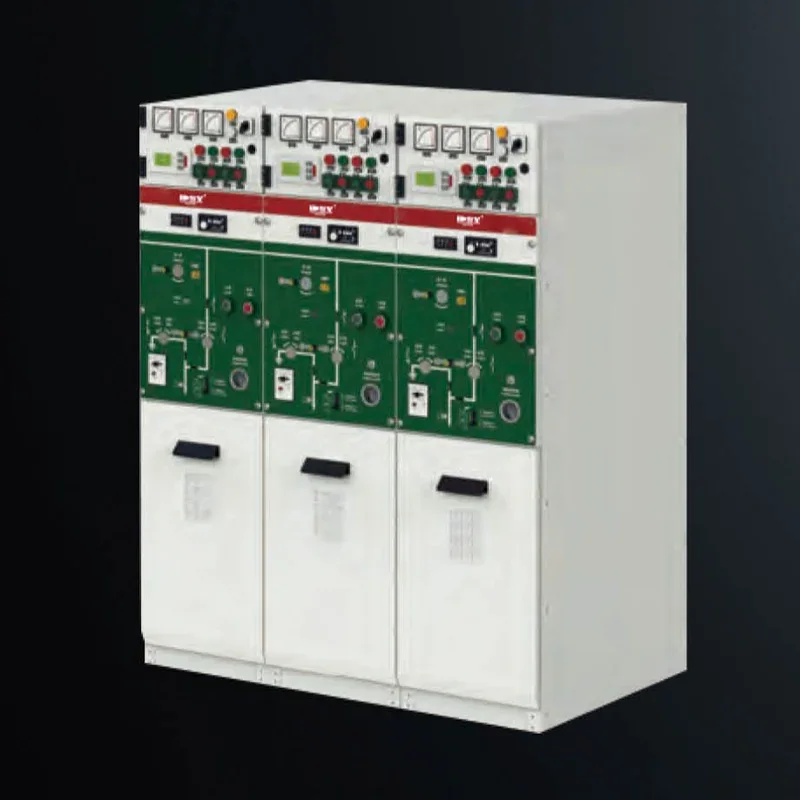
Short answer: at end of life, the insulating gas in switchgear must be recovered, not vented, and the recovery has to be documented. A single 24 kV ring main unit holding 0.43 kg of SF6 carries about 10.8 tonnes of CO2 equivalent, so the gas handling step matters more than the scrap value of the enclosure. Eco-gas units reduce that figure by roughly an order of magnitude but do not remove the obligation to recover, analyse and account for the gas.
Quick facts
Item | Value | Source or basis |
SF6 global warming potential | 25,200 (100-year) | IPCC AR6 |
C4F7N-based eco-gas GWP | about 2,100 | Manufacturer declarations, AR5 basis |
Dry air GWP | 0 | Naturally occurring mixture |
Typical SF6 mass, 24 kV RMU | 0.4 to 0.5 kg | 0.05 m3 gas volume at filling pressure |
CO2e of 0.43 kg SF6 | 10.8 t | 0.43 x 25,200 |
Recovery efficiency, good practice | 95 percent or better | IEC 62271-4 handling guidance |
SF6 ban, new MV switchgear up to 24 kV in the EU | in force since 1 January 2026 | EU F-gas Regulation 2024/573 |
SF6 ban, 24 to 52 kV in the EU | from 1 January 2030 | EU F-gas Regulation 2024/573 |
Gas quality acceptance for reuse | IEC 60480 | Reuse specification after reclamation |
Personnel competence | Certified handlers only | F-gas certification schemes |
What is actually inside the unit at end of life?
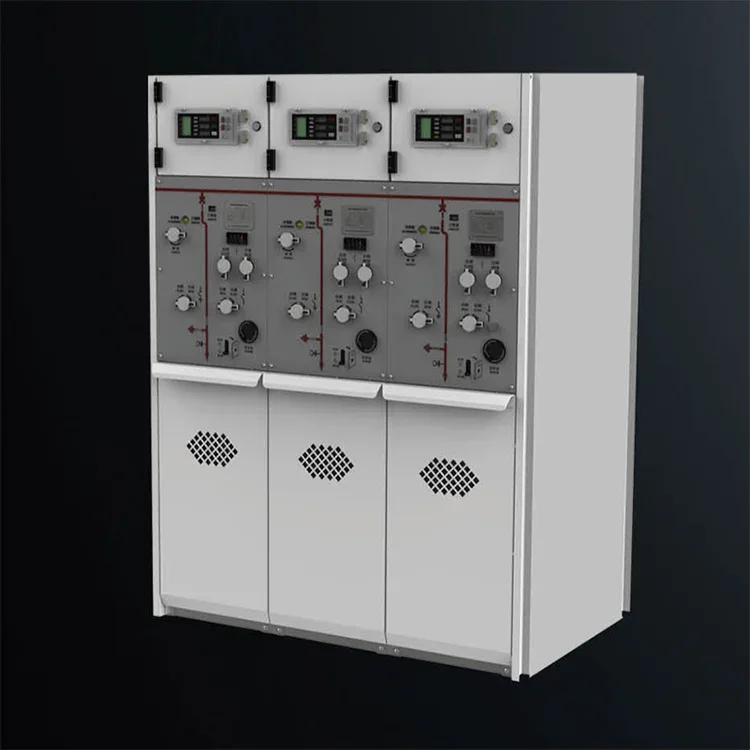
A gas-insulated ring main unit is not one material. It is at least six streams that have to be separated before anything can be recycled properly:
- The insulating gas, which is the only part with a regulatory handling obligation.
- Decomposition by-products from arcing, which sit in the gas and on internal surfaces as fine powder. These are toxic and corrosive and are the reason gas handling needs personal protection, not just a recovery cart.
- Epoxy components: bushings, insulators, busbar supports, and in solid-insulated designs the cast part that replaces the gas entirely.
- Copper and aluminium conductors, which carry most of the scrap value.
- Steel sheet for the tank and enclosure, usually painted or galvanised.
- Electronics: the secondary terminal block, sensors, motor operators, and any integrated remote terminal.
The practical consequence is that decommissioning is a sequence, not a single action. Gas first, then the internal inspection and cleaning, then mechanical dismantling, then material separation. Doing it in any other order means the gas escapes during demolition.

Why the gas cannot simply be vented
The arithmetic is short and it is the reason the regulation exists. A 24 kV ring main unit with a 0.05 m3 gas compartment at filling pressure holds about 0.43 kg of SF6. At a GWP of 25,200, that is:
0.43 kg x 25,200 = 10,836 kg CO2 equivalent
= 10.8 tonnes CO2 equivalent
For scale, at 200 g CO2 per km for a mid-size petrol car, 10.8 tonnes is roughly 54,000 km of driving. One small cabinet, vented, equals a couple of years of commuting. A utility decommissioning a few hundred units a year is therefore handling a climate quantity that is materially larger than its vehicle fleet, and until recently almost none of it appeared in any report.
That is the whole logic of the F-gas regime: the quantity is small in mass, large in impact, and concentrated in a small number of identifiable owners who can be regulated.
What the regulation now requires
The EU F-gas Regulation 2024/573 tightened the framework in two directions that matter for switchgear.
The first is a phase-out on new installations. SF6 is banned in new medium-voltage switchgear up to 24 kV from 1 January 2026, extended to 24 to 52 kV from 1 January 2030, and to above 52 kV from 1 January 2032. The dates are now close enough that they should be in a procurement specification rather than in a strategy document.
The second is lifecycle accounting. Operators must keep records of the gas charge, leak checks, top-ups and final recovery, and the work must be done by certified personnel using certified recovery equipment. The record is the compliance artefact. A unit that was properly recovered but has no documentation is, from an enforcement perspective, indistinguishable from one that was vented.
Outside the EU the requirements differ, but the direction is consistent: gas registers, certified handlers, and a prohibition on venting. Buyers exporting to the Middle East, Africa or Southeast Asia should expect the same questions from their own regulators within a few years, and it is cheaper to design the documentation once.
How the gas is recovered, and what happens to it after
The sequence is standard, and the equipment is not complicated: a recovery unit with a compressor, a storage vessel, and filters for moisture and decomposition products.
- Recovery. The gas is drawn from the compartment into a storage cylinder until the residual pressure is at or near atmospheric. Recovery efficiency of 95 percent or better is achievable with standard equipment and is the number to specify.
- Residual handling. What remains at sub-atmospheric pressure is purged with nitrogen and recovered again. This second pass is where most of the difference between a good and a careless job shows up, because it is invisible and takes time.
- Analysis. The recovered gas is sampled for moisture, acidity, and air content, against IEC 60480 limits. This determines whether it can be reclaimed or must be destroyed.
- Reclamation or destruction. Clean gas is dried and filtered and returned to service as reclaimed SF6, which is the normal outcome and is economically preferable. Gas that fails the analysis goes to thermal destruction at a licensed facility, where the SF6 is dissociated at high temperature and the fluorine captured as calcium sulphate or hydrofluoric acid for neutralisation.
The point worth remembering: reclaimed SF6 is a product with a market, not a waste. That is why the recovery step is usually economically rational even without regulation, and why the failures tend to be in documentation rather than in willingness.
Are eco-gas units easier at end of life?
Partly, and the honest answer is less clean than the marketing suggests.
A C4F7N mixture at a GWP of about 2,100 reduces the climate impact of the same gas mass by a factor of roughly twelve: 0.43 kg becomes about 900 kg CO2 equivalent rather than 10.8 tonnes. Dry air and vacuum designs reduce it to essentially zero. That is a real and large improvement, and it is the reason the technology exists.
But three things do not change. The gas still has to be recovered rather than vented, because 900 kg CO2e per unit times a few thousand units is not nothing. The gas still has to be analysed, because mixtures separate and the ratio drifts after arcing. And the decomposition products of fluoronitrile gases are at least as aggressive as those of SF6, so the personal protection requirement is the same or higher.
There is also a new problem that SF6 never had: mixture management. A two-component gas cannot simply be topped up without knowing the current ratio, so decommissioning a fleet of eco-gas units requires a mixing and measuring capability that most depots do not yet have. This is a real operational gap and it is being solved slowly.
What about the solid materials?
The scrap value sits in the copper, and the recycling difficulty sits in the epoxy.
Copper conductors and busbars are straightforward: separate, grade, sell. Steel is straightforward if the paint and galvanising are acceptable to the recycler, which they usually are at scrap grade. Epoxy is the hard part. Cast epoxy with silica filler is a thermoset, it cannot be remelted, and the usual destination is landfill or, increasingly, co-processing as a fuel substitute in cement kilns. Some manufacturers now run take-back schemes that regrind epoxy into filler for non-electrical products, but this is the exception.
This is worth stating plainly because it is where the circularity claims get thin. A unit can be 95 percent recyclable by mass and still send its single largest non-metallic component to landfill.
Should the unit be refurbished instead of scrapped?
Sometimes, and the decision turns on the gas compartment rather than on the electrical parts.
Refurbishment makes sense when the enclosure and the gas tank are sound, the gas analysis shows the charge is clean, and the wear is concentrated in replaceable parts: mechanisms, operating coils, secondary wiring, and in some designs the circuit-breaker pole assemblies. In that case the unit can be re-gassed, re-tested and returned to service, which avoids the embedded carbon of a new enclosure and is usually the lowest-cost option.
Scrapping is the better answer when the tank has leaked and the internal surfaces carry decomposition residue, when the manufacturer no longer supports the design, or when the unit predates the current interlock and arc-fault requirements. A refurbished unit that still does not meet the internal arc classification a modern specification demands is a liability with a fresh coat of paint.
The decision test is short: is there a documented gas tightness result after refurbishment, and can the unit be re-rated with evidence? If both answers are yes, refurbish. If either is no, the unit is scrap with a gas handling step attached.
What a buyer should require in the contract
Six clauses, all short, and together they decide whether the end of life is an asset or a liability.
- A take-back obligation, stated as a price or as a service, with a defined response time after notification.
- A decommissioning method statement, submitted before delivery, describing the gas recovery sequence and the equipment used.
- A gas register delivered with the unit and maintained through its life: initial charge, top-ups, leak checks, final recovered quantity.
- A certificate of recovery or destruction from a licensed facility, naming the quantity and the destination.
- The gas composition and total mass stated on the nameplate and in the manual, so the decommissioning contractor can plan without opening the unit.
- A statement of the recovery efficiency the manufacturer's own service organisation achieves, which is a more useful number than a design claim.
Frequently asked questions
Can SF6 be reused after recovery?
Yes, and it normally is. Recovered gas that meets the IEC 60480 limits for moisture, acidity and air content can be dried, filtered and returned to service as reclaimed SF6. Only gas that fails analysis goes to destruction. Reclamation is both cheaper and lower impact than destruction, which is why the industry does it.
How much gas does a typical RMU contain?
For a 24 kV ring main unit with a gas compartment around 0.05 m3, the charge is typically 0.4 to 0.5 kg of SF6 at filling pressure. Larger, multi-way units and higher voltages hold more. The exact figure should be on the nameplate, and if it is not, that is the first question to ask.
Is an eco-gas unit exempt from recovery requirements?
No. The obligation follows the gas, and a fluoronitrile mixture at a GWP of about 2,100 is still a fluorinated greenhouse gas under the F-gas framework. Dry air and vacuum designs are outside the gas regulation entirely, which is one reason they are attractive in markets with strict enforcement.
What happens if the gas is vented by accident?
The unit is treated as having emitted its full charge, and the operator carries the reporting obligation. In practice this is why recovery equipment and trained personnel are required rather than recommended: an accidental release during decommissioning is exactly the scenario the record-keeping regime is designed to make visible.
How long does decommissioning take?
Gas recovery on a single RMU takes roughly one to two hours with standard equipment, plus the purge pass. The mechanical dismantling and material separation take longer and depend on whether the unit is being scrapped or refurbished. A realistic planning figure for a site visit is half a day per unit including documentation.
Does the ban apply to existing installed units?
No. The phase-out dates apply to placing new products on the market, not to equipment already in service. Existing SF6 units may continue to operate, subject to leak checks, record keeping and the ban on venting at end of life. That means the decommissioning workload will persist for decades after the last SF6 unit is sold.
Standards and references
- IEC 62271-4: handling of SF6 and its mixtures, including recovery and reclaim.
- IEC 60480: specification for reused SF6 after reclamation.
- IEC 62271-1: common specifications for high-voltage switchgear, including gas tightness.
- EU Regulation 2024/573 on fluorinated greenhouse gases, including the switchgear phase-out dates.
- IPCC AR6, Global Warming Potential values, 100-year horizon.
PREVIOUS:
Related News

From June 5th to 8th, 2025, Shenzhen Dongshengyuan Electrical Equipment Co., Ltd. (hereinafter referred to as "Dongshengyuan Electric") participated in the Southeast Asia Electricity and Energy Exhibition (SEAPAE) held in Jakarta, Indonesia. During the exhibition, the company highlighted its three core product lines: high-voltage and low-voltage distribution switchgear, intelligent circuit breakers, and environmentally friendly load switches. These products are designed to provide targeted solutions for the high temperature and high humidity environments commonly found in Southeast Asia, as well as the growing demand for new energy access. They have successfully attracted over 200 industry customers for business negotiations.
The difference between circuit breakers and vacuum circuit breakers
Circuit breaker is an abbreviation for pole type circuit breaker. Circuit breakers are also vacuum circuit breakers
1B601, Lefu Square, No. 481 Guangming Avenue, Dongkeng Community, Fenghuang Street, Guangming District, Shenzhen
Request Quote
Note: Please leave your contact information and our professionals will contact you as soon as possible!