Welcome to Shenzhen Dongshengyuan Electrical Equipment Co., Ltd.


















Gas Insulated Switchgear Drives the Next Wave of Smart Grid Modernization
As global energy demand continues to rise and power infrastructure becomes increasingly complex, gas insulated switchgear is emerging as a critical technology for modern electrical networks.
Feb 09,2026
As global energy demand continues to rise and power infrastructure becomes increasingly complex, gas insulated switchgear is emerging as a critical technology for modern electrical networks. Utilities and industrial users alike are turning to gas insulated switchgear to enhance system reliability, reduce installation footprints, and support the rapid deployment of smart grids. With its compact design, high operational safety, and outstanding insulation performance, gas insulated switchgear is now widely adopted in urban substations, renewable energy facilities, transportation hubs, and data centers.
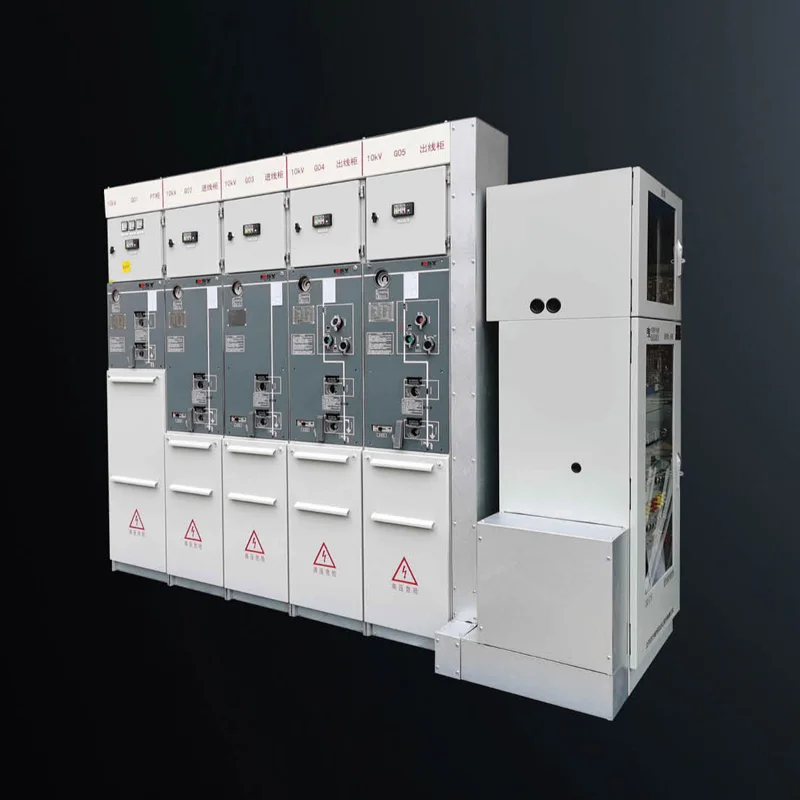
One of the key advantages of gas insulated switchgear lies in its sealed structure, which uses insulating gas to protect live components from dust, moisture, and environmental contamination. This design significantly improves operational stability and minimizes maintenance requirements. Compared with traditional air-insulated equipment, gas insulated switchgear offers higher dielectric strength and superior arc-quenching capability, enabling it to perform reliably under harsh conditions and heavy electrical loads. As a result, it is especially suitable for densely populated cities where space is limited and safety standards are extremely high.
In recent years, the integration of digital monitoring and intelligent control technologies has further expanded the application scope of gas insulated switchgear. Advanced sensors, real-time diagnostics, and remote operation functions allow operators to monitor equipment health, predict potential failures, and optimize maintenance schedules. These smart features not only enhance grid efficiency but also reduce downtime and operational costs, supporting the global transition toward smarter and more resilient power systems. With increasing investments in renewable energy, gas insulated switchgear is also playing a vital role in connecting wind farms, solar plants, and energy storage systems to the main grid, ensuring stable and efficient power transmission.
Looking ahead, continuous innovation in materials, insulation gases, and eco-friendly designs will drive the sustainable development of gas insulated switchgear. Manufacturers are actively researching low-carbon and alternative gas solutions to reduce environmental impact while maintaining high performance. As governments and industries prioritize energy efficiency, safety, and sustainability, gas insulated switchgear is expected to remain a cornerstone technology in next-generation power infrastructure, enabling reliable electricity delivery and supporting the long-term evolution of global energy networks.
PREVIOUS:
Related News

From June 5th to 8th, 2025, Shenzhen Dongshengyuan Electrical Equipment Co., Ltd. (hereinafter referred to as "Dongshengyuan Electric") participated in the Southeast Asia Electricity and Energy Exhibition (SEAPAE) held in Jakarta, Indonesia. During the exhibition, the company highlighted its three core product lines: high-voltage and low-voltage distribution switchgear, intelligent circuit breakers, and environmentally friendly load switches. These products are designed to provide targeted solutions for the high temperature and high humidity environments commonly found in Southeast Asia, as well as the growing demand for new energy access. They have successfully attracted over 200 industry customers for business negotiations.
The difference between circuit breakers and vacuum circuit breakers
Circuit breaker is an abbreviation for pole type circuit breaker. Circuit breakers are also vacuum circuit breakers
1B601, Lefu Square, No. 481 Guangming Avenue, Dongkeng Community, Fenghuang Street, Guangming District, Shenzhen
Request Quote
Note: Please leave your contact information and our professionals will contact you as soon as possible!